
Site 13 – Mineral Fork
Location: The trailhead is located about 6 miles up the canyon on the southside. A paved road crosses the creek, bringing you to the trailhead.
Date: Mining here lasted from about 1870 to possibly the mid-1920s.
Significance: Mineral Fork’s mines didn’t yield much compared to others, but one mine’s name, Regulator Johnson, remains known today. The story of the mine’s owner offers insight to the challenging and dangerous life of a Norwegian immigrant working in the mining industry.
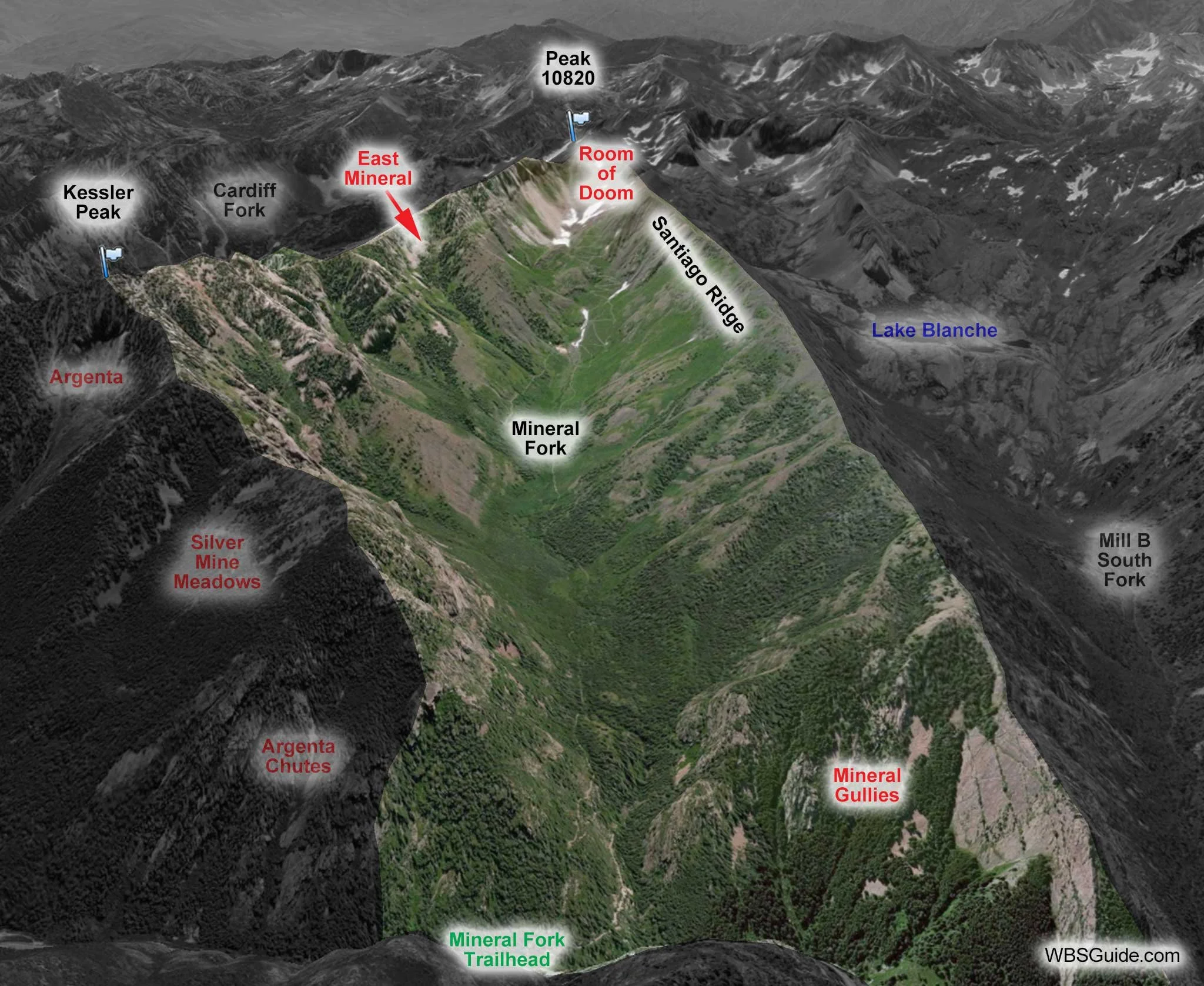
Photo Title: Map of Mineral Fork showing the trailhead at the bottom, and Lake Blanche in the Mill B South Fork to the west. This map also shows backcountry skiing routes, and the Regulator Johnson Mine sits at the head of Mineral Fork near the “Room of Doom” label. {1}
Mineral Fork’s mines yielded far less than others in Big or Little Cottonwood Canyons. However, one of its mines, Regulator Johnson, remains known today as namesake for an expert ski run at Snowbird Resort in Little Cottonwood Canyon. The story of the mine’s owner, John S. Johnson, reveals the challenging life of a Norwegian immigrant who came to Utah to earn a living. In 1863, at age19, Johnson immigrated to the U.S., arriving in the Utah Territory by 1870. Johnson’s Utah arrival coincided with the completion of the Utah Central Railroad spur, the rail line joining Salt Lake City to Ogden. One year earlier, on May 10, 1869, the golden spike was driven at Promontory Point, Utah, completing the Transcontinental Railroad, and bringing the train through Odgen, but not Salt Lake City. This watershed moment abruptly ended the territory’s isolation and expedited Utah’s mining era, which began in 1863. In 1870, Johnson was living at Atla in Little Cottonwood Canyon during its first important mining season. People came to know Johnson as the owner and operator of both the “Regulator” and “Johnson” mines, and at some point, he became known as “Regulator Johnson.” His mines at Alta didn’t make him a rich man, but they reliably provided an income for him for over thirty years. He married Louisa M., fifteen years his junior, and they bought a house in downtown Salt Lake City.
At the age of 35, an accident at Evergreen Mine in Alta left him alive, but he sustained injuries he would carry the remainder of his life. The Salt Lake Tribune reported on June 15, 1879 ,”…Mr J S Johnson, commonly known as “Regulator Johnson,” met with a very severe accident yesterday, by which he got a leg broken and both hands very badly mutilated, also his face, and he will lose, I think, three fingers and probably an eye. He goes to the Hospital today.” Miraculously, he did recuperate, but his appearance left a memorable impression. Children Josie and Lois Maxfield, who helped their parents run the Maxfield Lodge in BCC wrote, “When we children first met him, we were frightened. His face had been disfigured, and parts of his hands had been blown off by an explosion. He always wore kid gloves, dressed in black, and wore a gold watch chain.” [2] Meanwhile, two of Johnson’s brothers, O.J. and Cornelius arrived in Utah, and began living and working in Alta. Again, the hazardous working conditions brought calamity when Johnson’s younger brother O.J., aged 37, was one of twelve people killed in March 1884 by an avalanche that swept away the Emma mining building at Alta. Johnson bought a family burial plot in Mount Olivet Cemetery, located south of the University of Utah, to bury his brother who had only resided in Utah a few years.
A year later, another avalanche swept through the village of Alta claiming thirteen victims. When the rescue party completed their work, they found that Cornelius’ (Johnson’s surviving brother) wife and children had miraculously survived. In the aftermath, Cornelius and his family moved to California, returning to Utah fifteen years later. Six years after the mining accident, in 1885, Johnson returned to mining, but shifted this new work to Mineral Fork in Big Cottonwood Canyon. Although miners had embarked on operations there since 1872, Johnson would become the dominant producer there. He and Louisa placed a mortgage on their house to purchase a share in the Silver King No. 2 claim. A few years later, he filed a claim adjoining the Silver King No. 2, named “Louisa.” In 1899, he joined with two partners to form the Big Cottonwood Mining & Milling Company, but this ultimately led to foreclosure on his home, although he and his wife continued to live there. As if Johnson had not endured enough hardship, Louisa died at the young age of 37, and was laid to rest beside her brother-in-law in the family plot in 1897.
Johnson continued to oversee his mines at Alta and Mineral Fork. The national Panic of 1893 created a downturn in mining that lasted four years. As the national economy rebounded around the turn of the twentieth-century, Johnson was able to buy ten acres of land in South Salt Lake City and he remarried in 1904. He was only a few weeks into this new marriage when his wife, Regina, threatened to kill him with a knife and razor. Nearly six months after the marriage, he was granted a divorce. He continued his mining work between Alta and Mineral Fork, and worked in real estate as well. In 1909, he had his South Salt Lake City property platted into 104 building lots. He named two of these roads “Louise” and “Cordelia,” and they can be visited today. Louise Ave., located at 2860 South between 300 East and 200 East was surely named for his first wife, but it’s unknown who Cordelia Ave., located one block south, was named for. He retained two lots at the corner of Cordelia and State St. where he built a small house for himself. In 1911, he filed fourteen claims in the upper bowl of Mineral Fork, near the original Silver King No. 2 claim from 1885, and consolidated his Mineral Fork holdings. What still remains unknown is when, exactly, Johnson’s mines were officially renamed “Regulator Johnson Mine.” The earliest this name appears is the 1965 United States Geological Survey Dromedary Peak topographical map.
John S. Johnson died, aged 81, in 1925 at the Salt Lake County Hospital. He was buried in his family plot alongside Louisa and his two brothers. Johnson didn’t have children, and his closest relatives were his sister-in-law, Serena Johnson, widow of his brother Cornelius, who died in 1911, and her six children. Today, the Regulator Johnson name is well known by Snowbird skiers, although it’s likely they don’t know the true story about the resilient Norwegian immigrant who concealed his damaged hands with kid gloves, dressed in black, and sported a gold watch chain. {3}
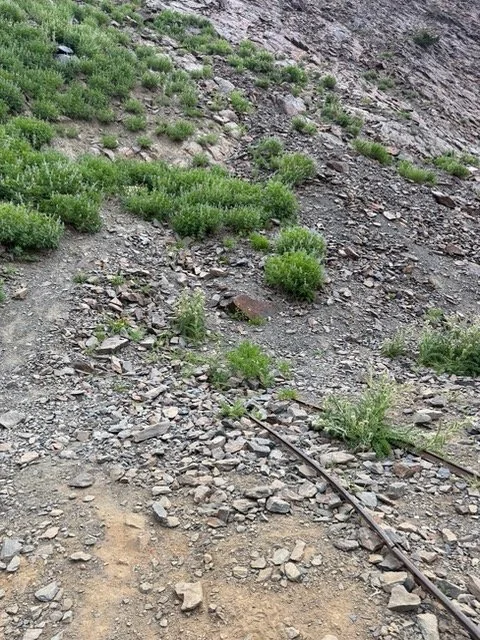
Photo Title: Tracks emerging from the caved-in Regulator Johnson Mine, located at the end of the hiking trail at the head of Mineral Fork. [4]
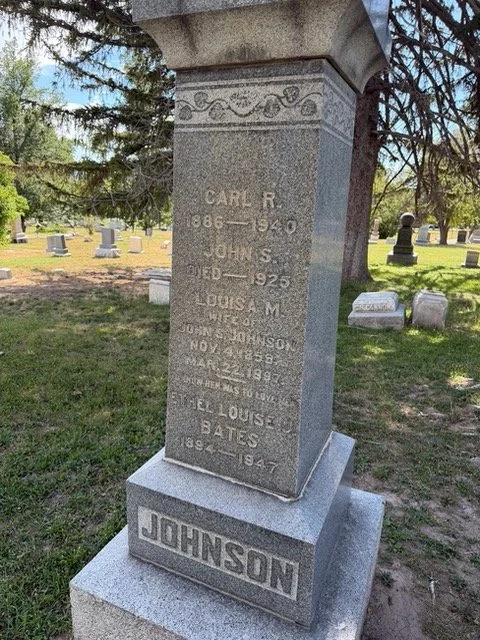
Photo Title: Johnson Family plot in Mt. Olivet Cemetery, Salt Lake City, Utah. [5]
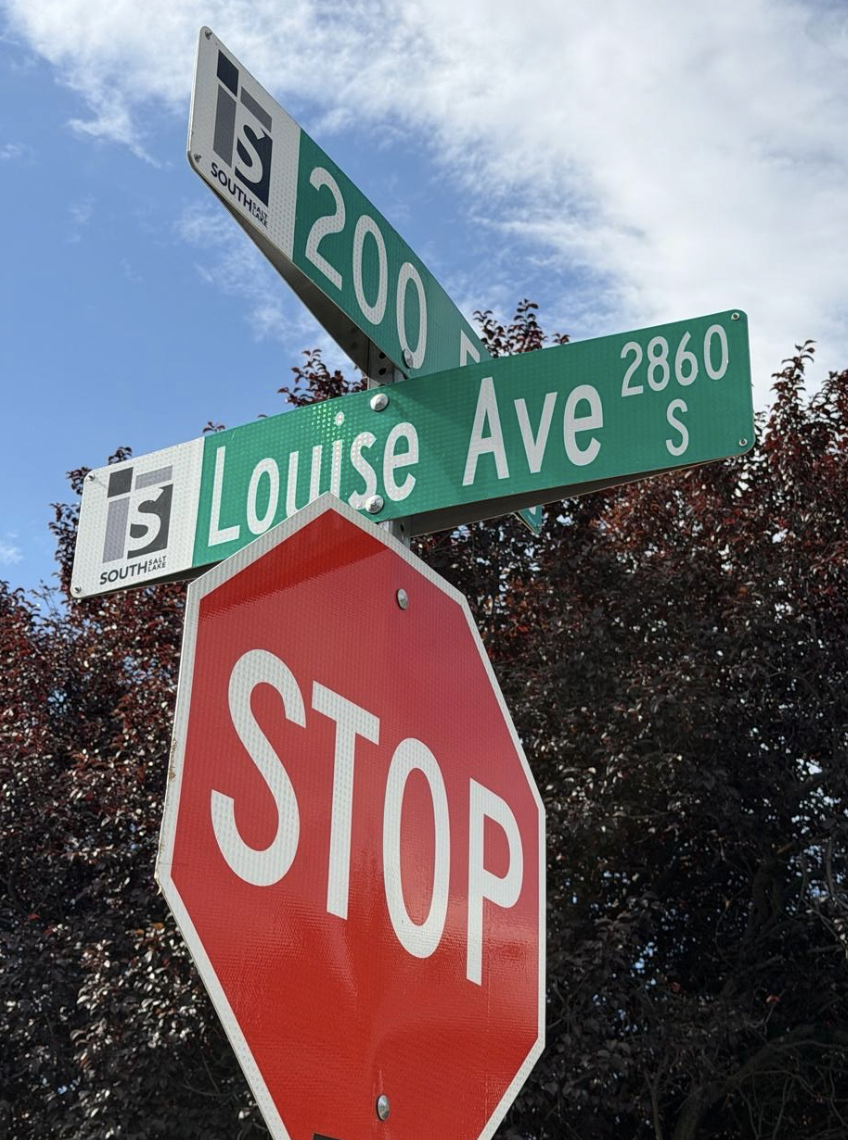
Photo Title: Louise Avenue in South Salt Lake City, Utah. [6]
Interesting Fact: Mine names offer a fascinating look at life in the Western U.S. since owners usually selected the names. Mines were named after owners (Johnson), sweethearts (Louisa), homelands (Cardiff), owner’s children (Emma), prosperity (Silver Fork), good luck (Lucky Day), whiskey (Coffin Varnish), tobacco (Bull Durham), gambling (Royal Flush), the Bible (King Solomon), Civil War Battlefields (Shiloh), Popular Songs (Clementine), and literary references like Eldorado or The Raven from Edgar Allen Poe. The name Regulator conveys strength, stability, and steady production or possibly a mine that would be so successful it would “regulate” the local price of silver or gold.